Brantial
Get Audit

PLATFORM / SITE AUDITOR

If Models Cannot Read Your Site, the Content Budget Is Wasted

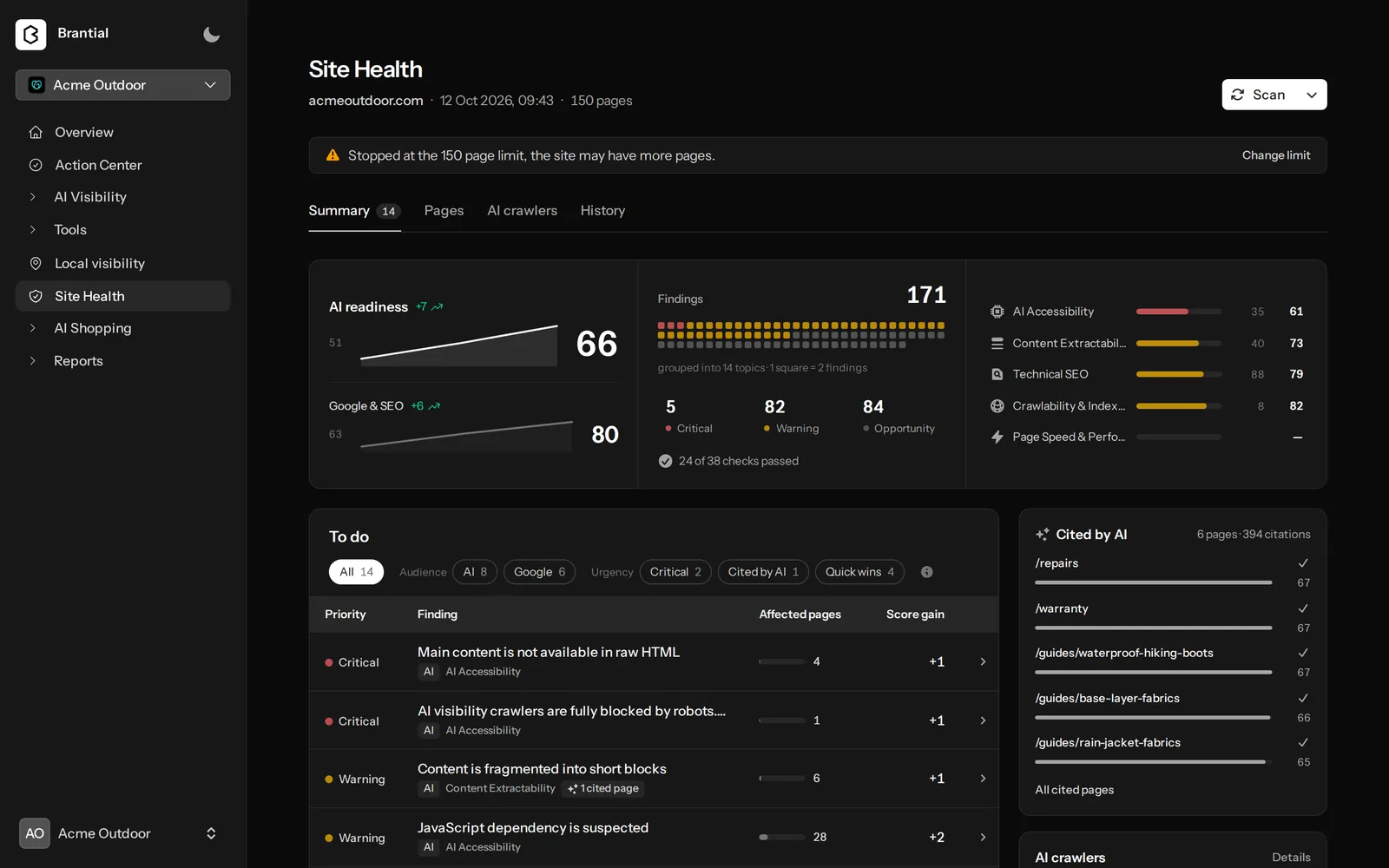
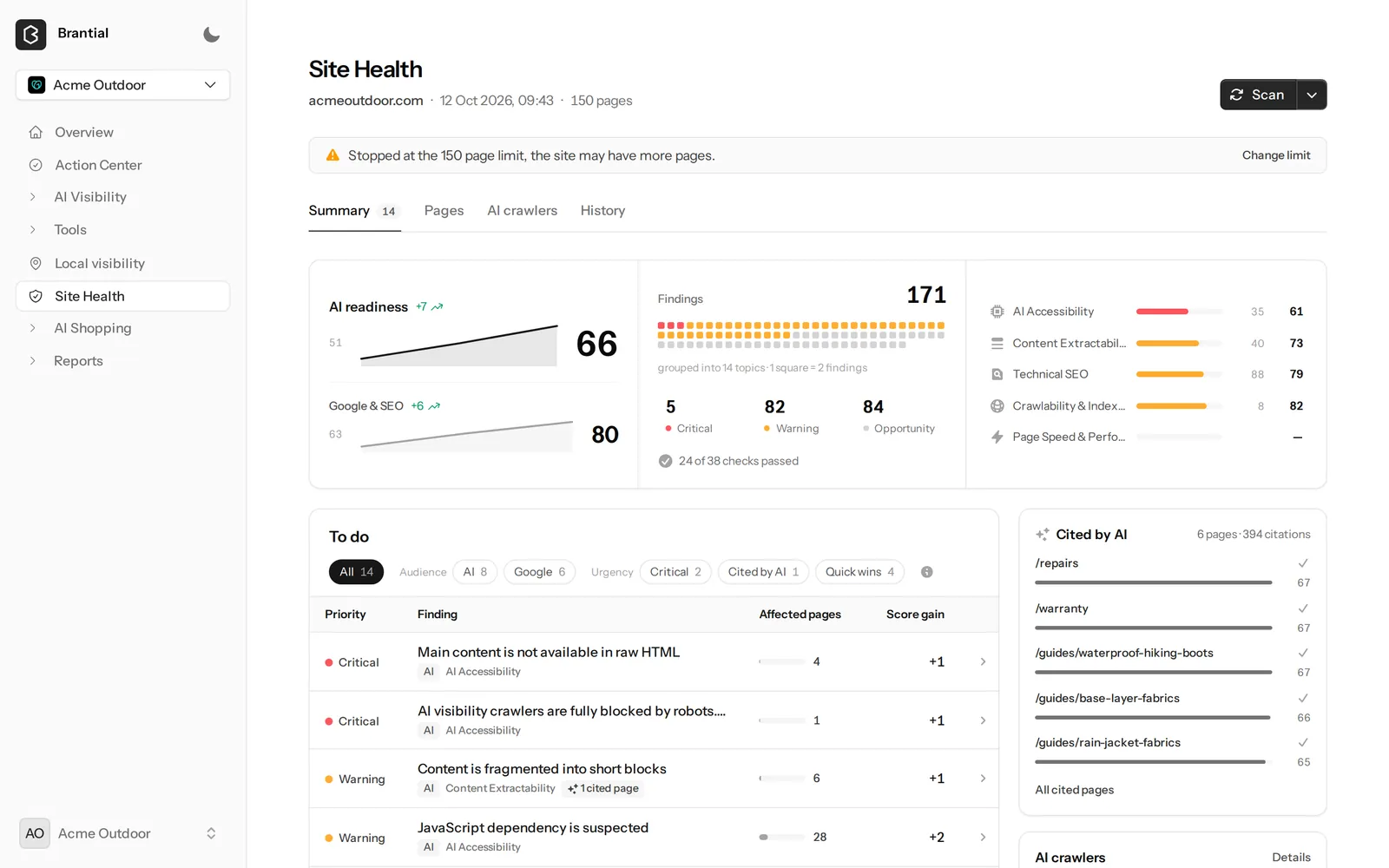
Site Auditor scores how answer engines see your site, page by page: crawler access, llms.txt and ai.txt, schema coverage, heading hierarchy, answer format and recency signals. Every finding becomes a task in Action Center and, where needed, a draft in Workflow Agent.

https://
42 signals checked in about four minutes. No sign-up, and every finding ships with its fix.
42 Signals checked
4 min Average scan time
96% Schema coverage reached in cases
Daily Re-scan frequency

THE CHALLENGE

Your Site Speaks Google. Models Speak Structure.

A page that ranks #1 on Google can be invisible to ChatGPT. Answer engines read a different set of signals — and most sites have never been checked against them.

01

Ranking says nothing about readability

Traditional SEO optimises titles, backlinks and keywords. Models parse structure: schema, hierarchy, explicit permissions. The two can diverge completely on the same page.

02

The files models look for probably don't exist

llms.txt and ai.txt tell AI crawlers what to read and how to interpret it. Most sites have neither — and many robots.txt files block AI bots by accident.

03

Schema gaps hand your answer to a competitor

Without Product, FAQ and Organization markup, models extract facts from whoever provides them. The citation goes to the site that made itself easy to read.

04

There is no PageSpeed score for AI readiness

Teams cannot prioritise what they cannot measure. Without a score, audits stay in the backlog because nothing says which fix actually moves citations.

PRODUCT VIEWFrom the live product interface
Site ScoreSample audit, 214 pages
72/ 100
PassedWarningFailing
Breakdown by CategoryScore per check group
Crawler access88
llms.txt / ai.txt40
Schema coverage65
Answer format74
The Audit FlowFrom finding to task
214 pages crawledOK
38 findings flaggedOK
Tasks into Action CenterRUN
Workflow Agent drafts
The Critical FindingPages missing llms.txt
128pages
EST. IMPACT: 12 QUERIES / WEEK

HOW IT WORKS

Diagnosis in Four Layers

ACCESS

Crawler and Bot Access

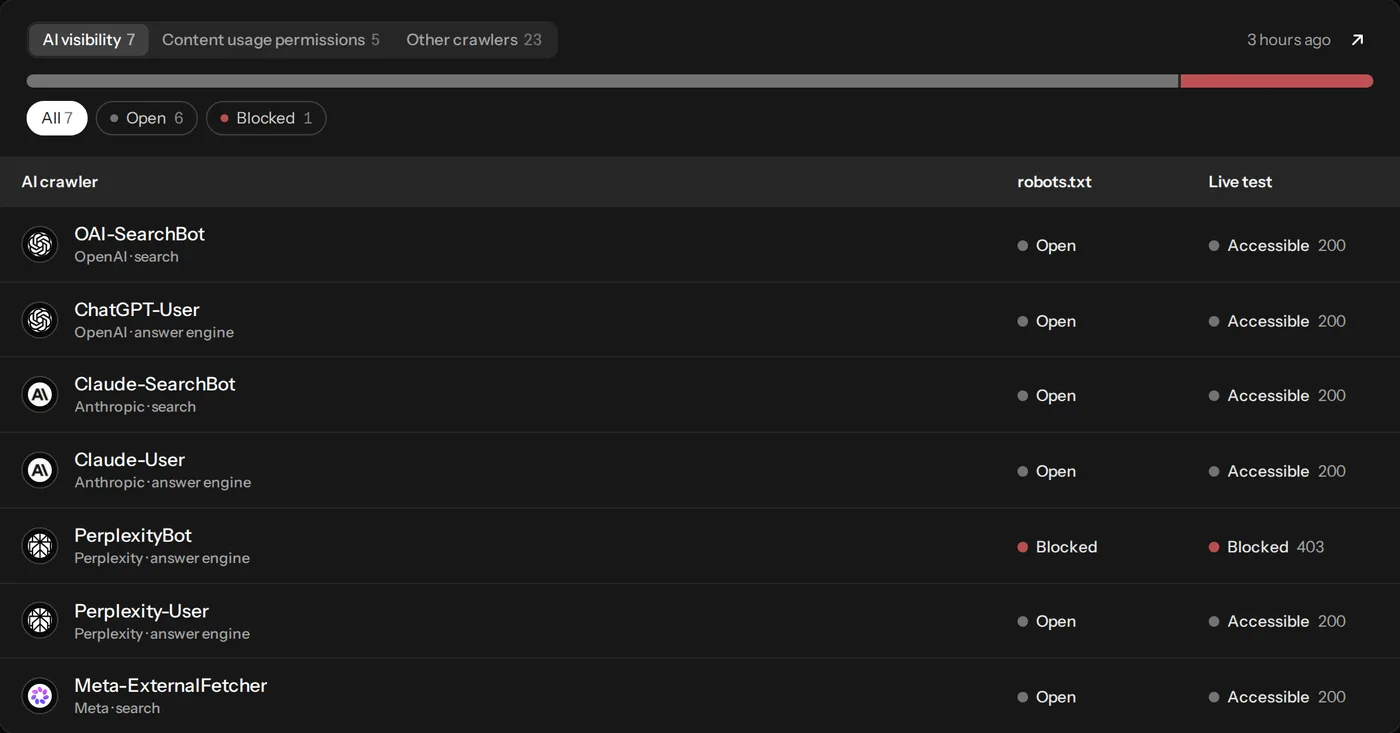
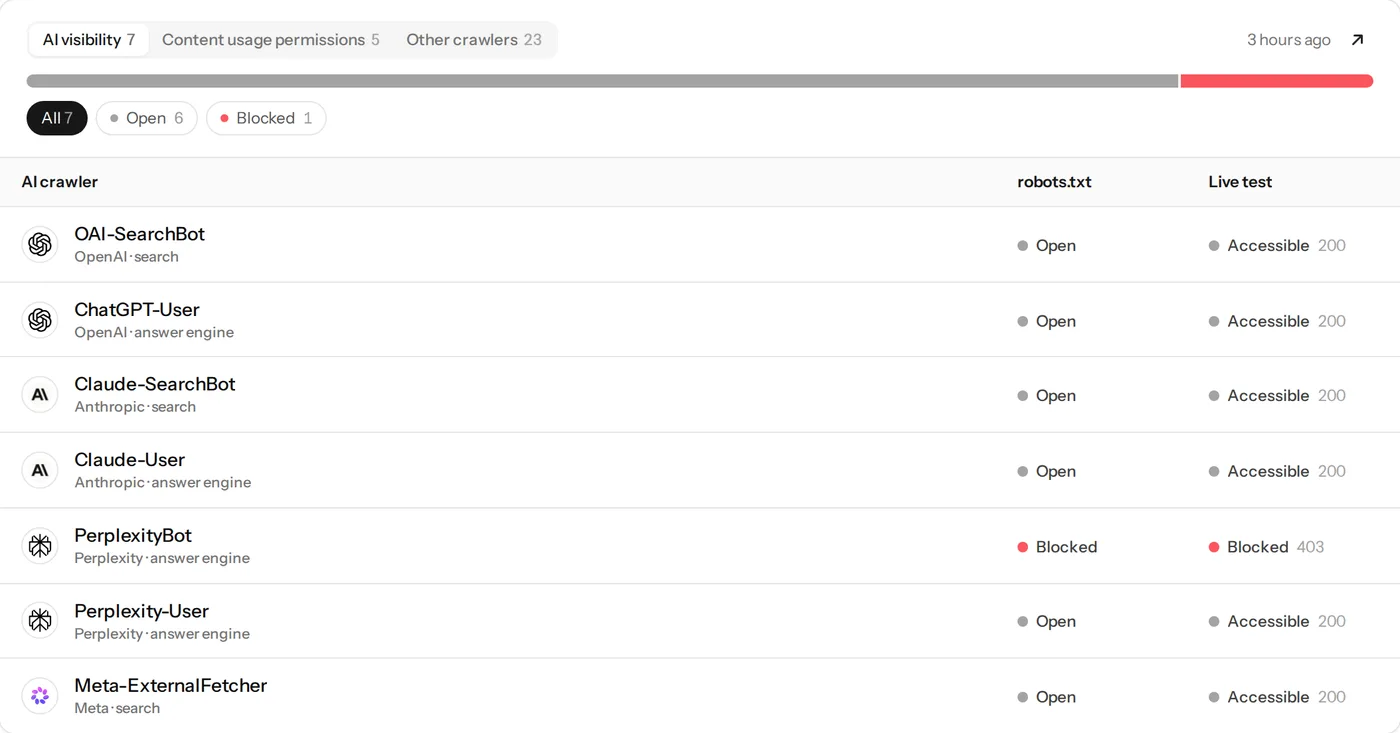
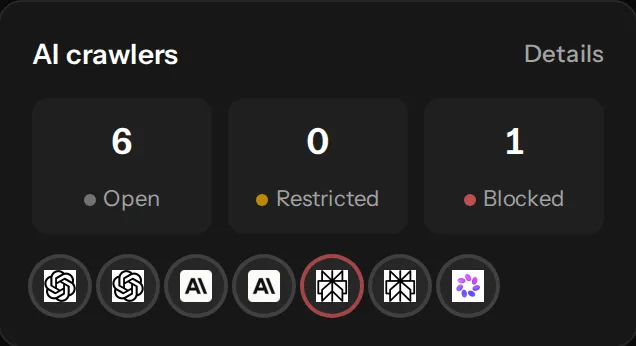
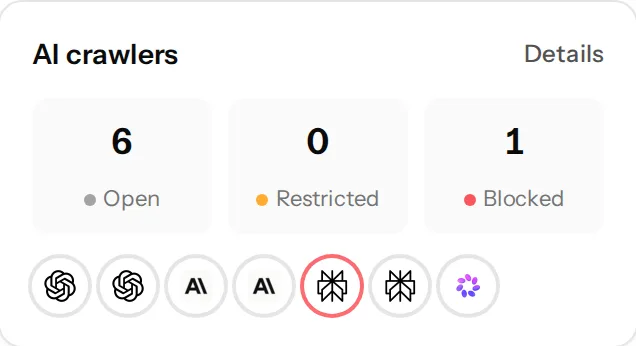
The robots.txt and server-level status of OAI-SearchBot, PerplexityBot, Google-Extended and other agents. A blocked bot means zero citation probability on that platform.

STRUCTURE

Schema, Headings and Answer Format

Pages are audited against their schema type, heading hierarchy is matched to question structure, and the first two sentences are scored on whether they answer directly.

TRUST

Author, Sources and Recency

Author information, source references, update dates and, in sensitive categories, a review note. These are preconditions for being selected in the Augment stage.

FILES

Llms.txt, Ai.txt, Sitemap

Missing files are generated in one click, and existing ones are audited for coverage and contradictions against the sitemap.

SCORE DASHBOARD

One Score That Says Where You Stand

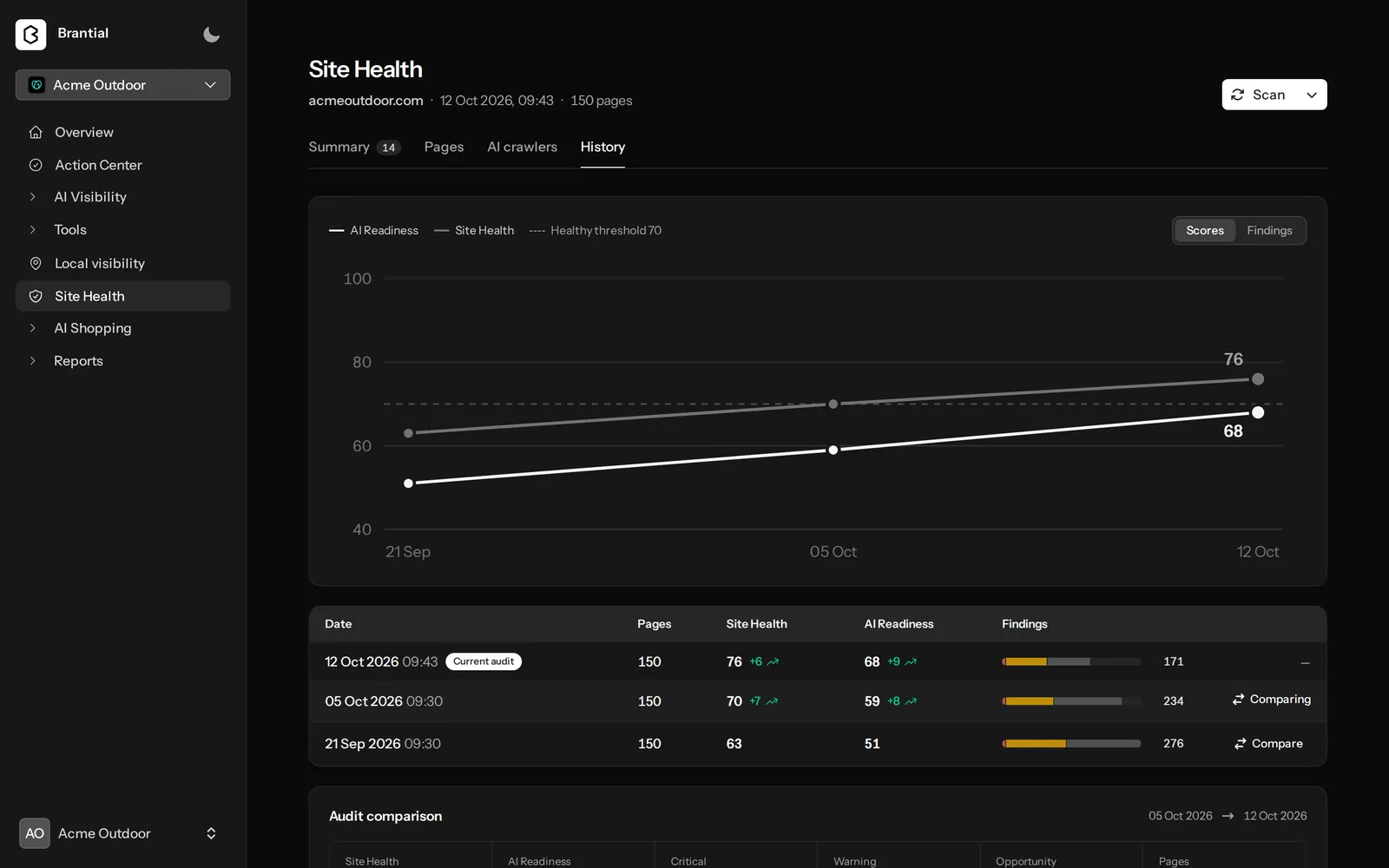
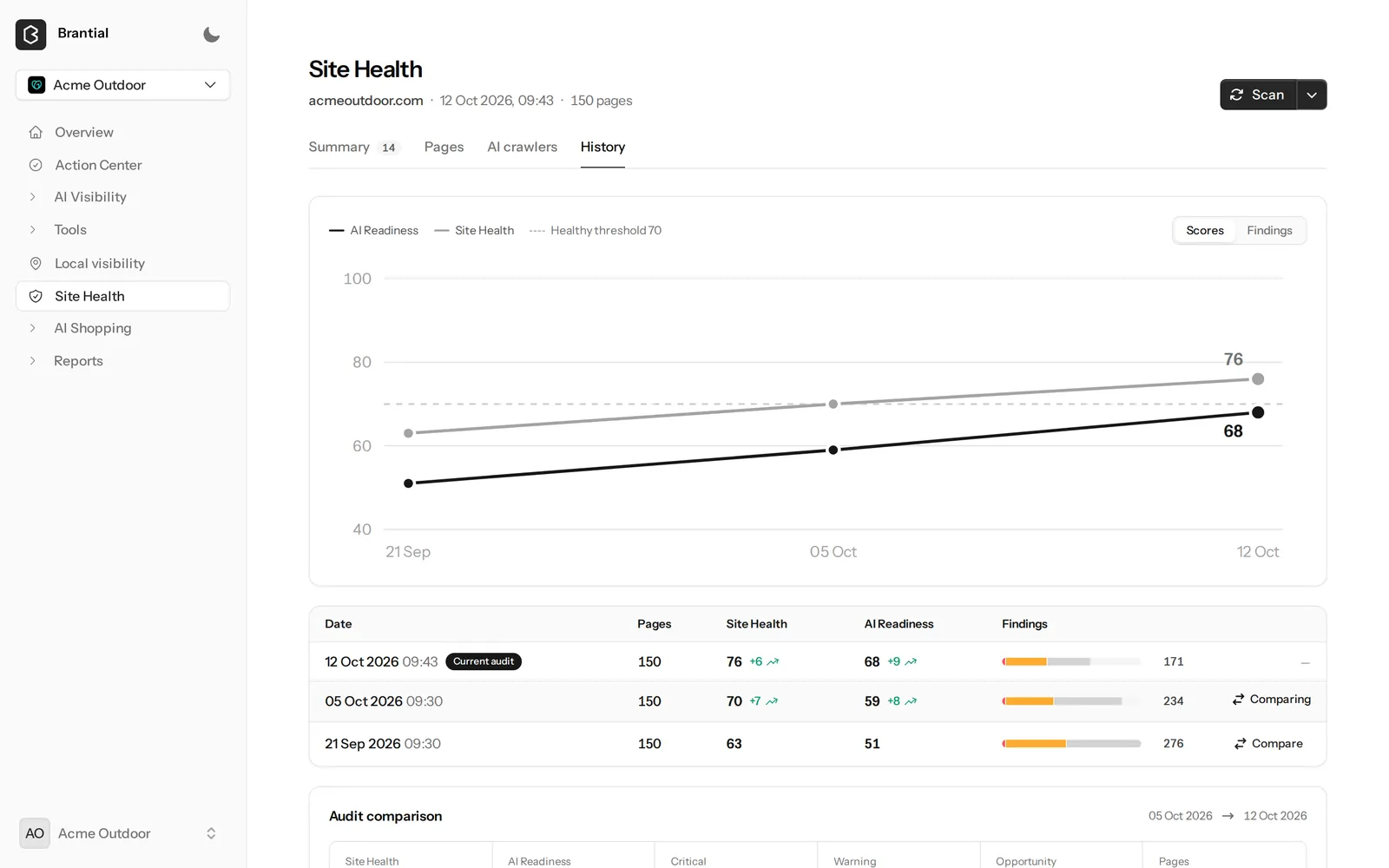
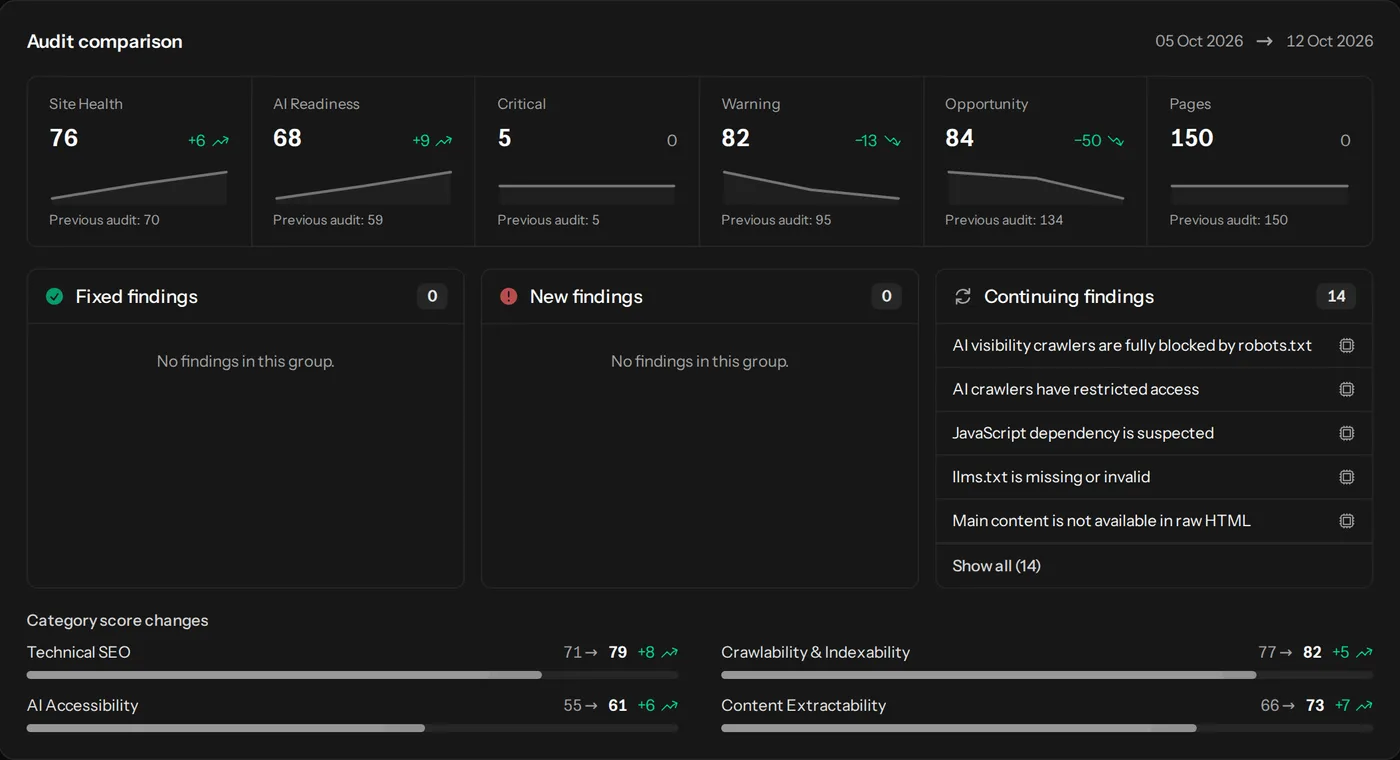
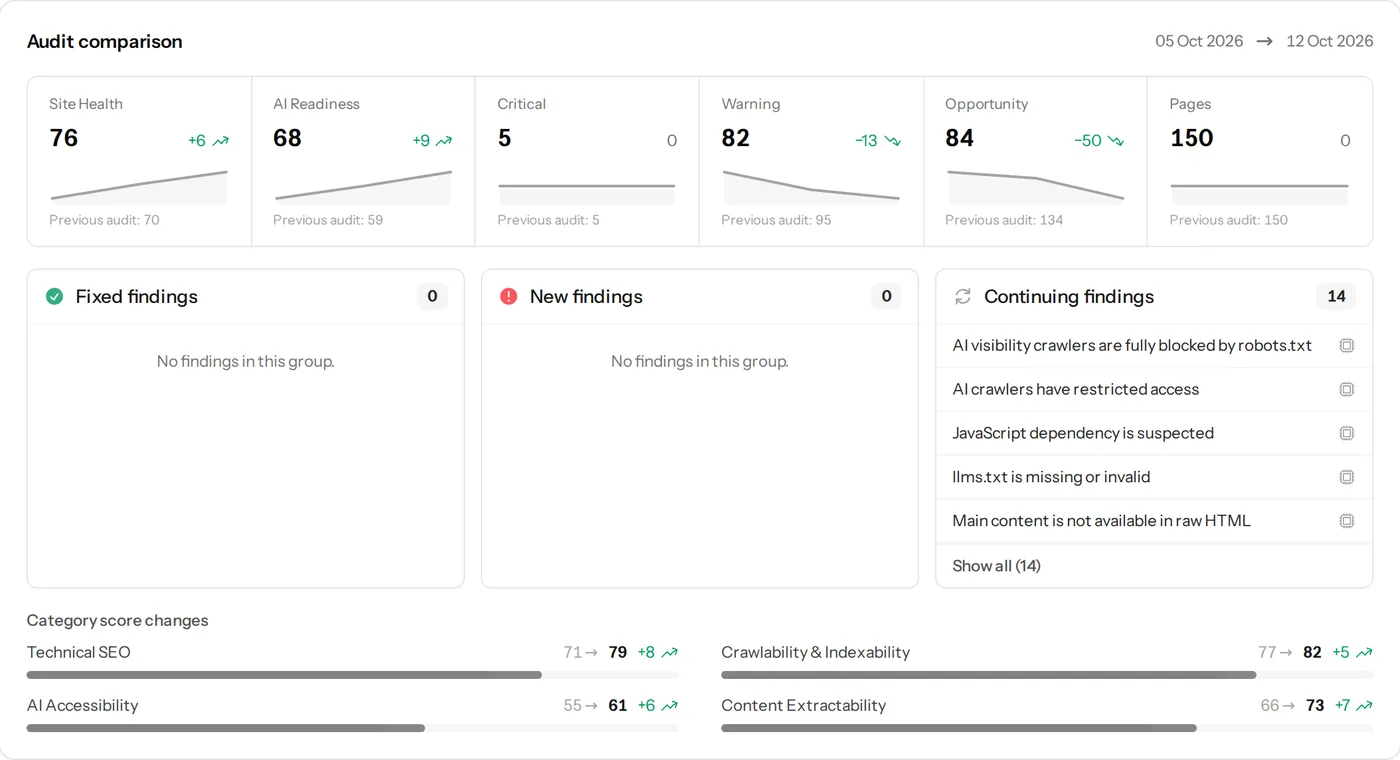
The overall score is built from weighted signals across access, structure, trust and files. Each category shows its own score, trend and a prioritised fix list — so a Monday-morning glance tells you what moved.

  • Category breakdown with trends
  • Prioritised fixes, ranked by citation impact
  • Board-ready: one number the CEO can track monthly

site auditor — overview

82 GEO SCORE
Access
94
Structure
78
Trust
71
Files
86

TECHNICAL AUDIT

The Infrastructure Layer, Checked and Graded

The technical pass digs into what AI crawlers actually touch: robots directives, llms.txt format, response headers, sitemap accessibility and render behaviour for non-browser clients. Every issue is graded so your team knows what to fix first.

  • robots.txt AI-bot directive analysis
  • llms.txt existence and format validation
  • Header, canonical and sitemap verification

auditor — technical scan

llms.txt MISSING HIGH
GPTBot access ALLOWED OK
PerplexityBot BLOCKED HIGH
Organization schema PARTIAL MED
Sitemap VALID OK
Answer format (p.1-2) WEAK MED

CAPABILITIES

Every Signal Ends in a Task, Not a Warning

Crawler & bot access, tested live

OAI-SearchBot, PerplexityBot, ClaudeBot, Google-Extended and more — robots.txt rule matching plus a live request per agent, so you see exactly who is blocked and why.

llms.txt & ai.txt audit and generation

Existence, format and coverage checks against your sitemap — and one-click generation when the files are missing or contradictory.

Schema validation

Missing required properties, deprecated types and the markup answer engines prioritise: Product, FAQ, HowTo, Organization.

Answer-format scoring

The first two sentences of every page are scored on whether they answer the question directly — the pattern models lift into responses.

Trust & recency signals

Author information, source references, update dates and review notes in sensitive categories — the preconditions of being selected.

Page-by-page score, daily re-scan

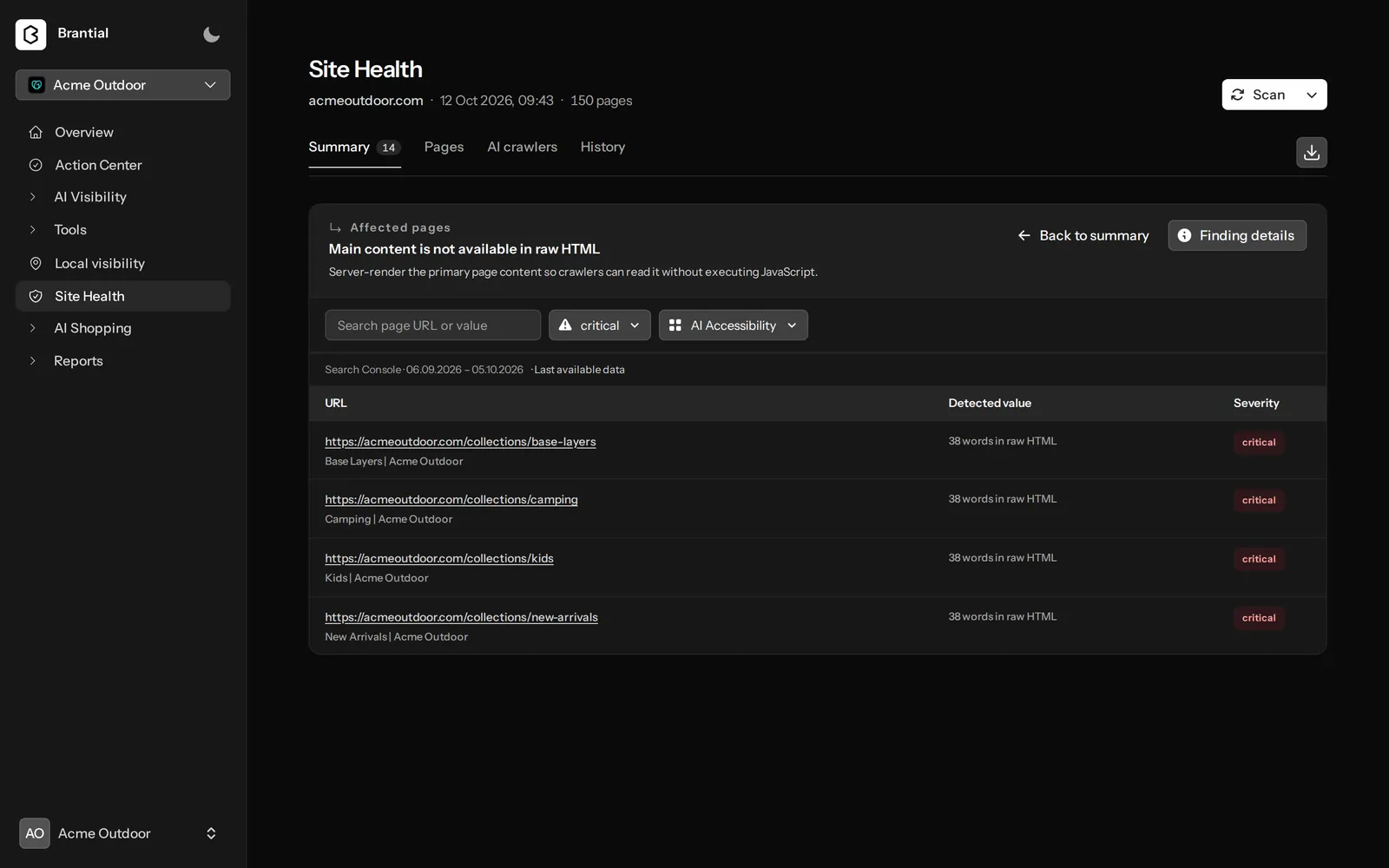
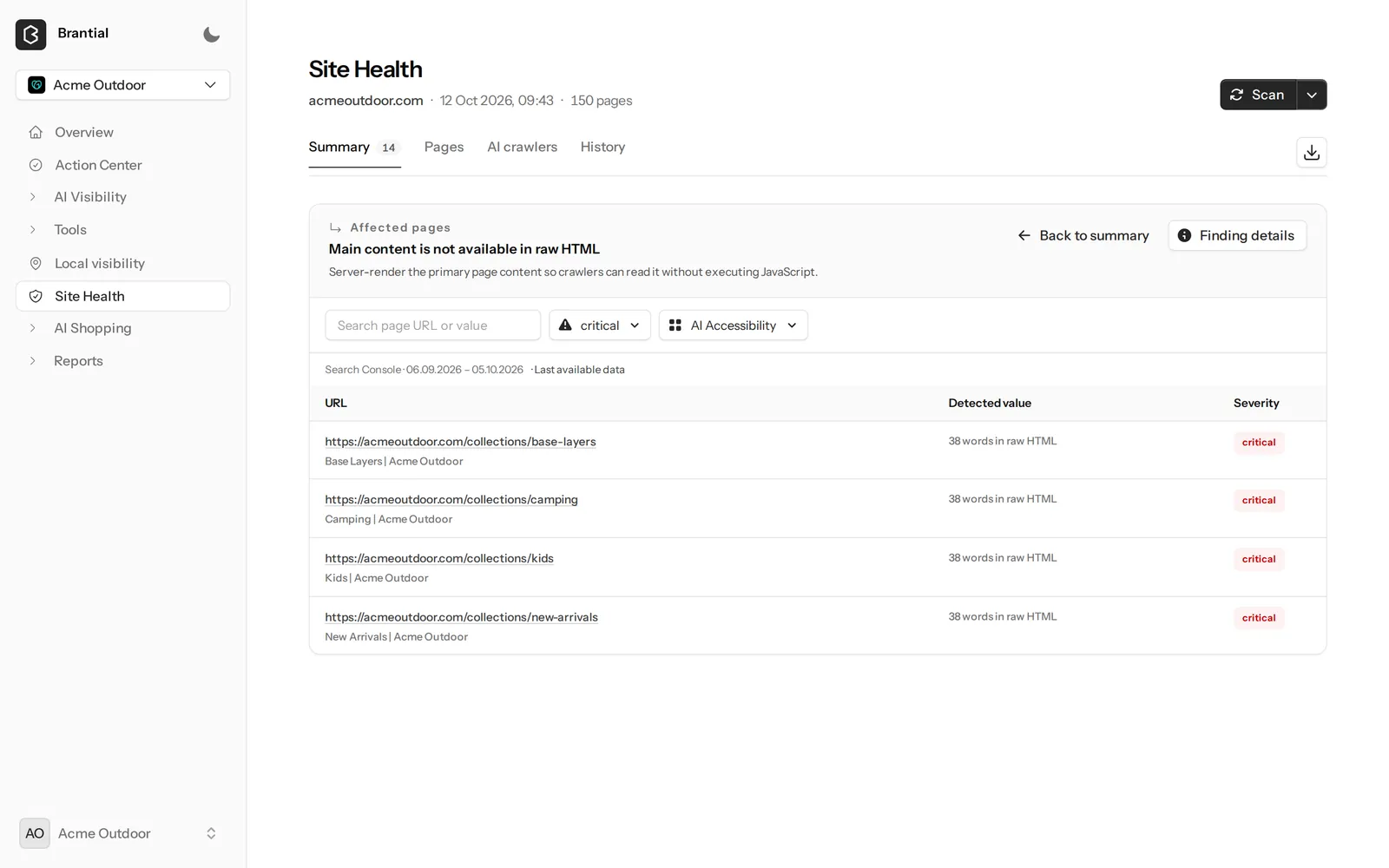
Not one site-wide average: each page gets its own score and trend, and every finding lands in Action Center as an assigned task.

SCORECARD

What an Audit Returns

The table below is the summary form of a real customer audit, and each row links to a task in Action Center.

CHECK
STATUS
IMPACT
ACTION
llms.txt
Missing
High
Generate in one click
OAI-SearchBot access
Blocked
Critical
Fix robots.txt
Schema coverage
38%
High
Add schema to 12 pages
Answer format
Partial
Medium
Workflow Agent draft
Update dates
Present
Low
No action needed
Page speed (bot)
1.9s
Low
Keep monitoring

FAQ

Site Auditor, Asked Directly

How is a GEO audit different from an SEO audit?

An SEO audit asks whether search engines can rank the page; a GEO audit asks whether answer engines can read, trust and cite it. The signal sets overlap on crawlability, then diverge: llms.txt, answer format, entity clarity and per-model bot access have no SEO equivalent.

Which signals are checked?

42 signals across four layers: crawler and bot access, structure (schema, headings, answer format), trust (author, sources, recency) and files (llms.txt, ai.txt, sitemap). Fewer, deeper checks — every finding ships with its fix.

Does llms.txt actually matter?

It is an emerging standard: adoption among crawlers varies, but the file costs minutes to generate and removes ambiguity about what may be read. We audit it honestly — as one signal of many, not a magic switch.

How long does a scan take, and how often does it run?

Setup takes about four minutes; scans re-run daily so score trends reflect your fixes within a day.

What happens after a finding?

Each finding becomes a task in Action Center with severity and impact. Where the fix is content, Workflow Agent drafts it; where it is a file, the auditor generates it in one click.

Is the score comparable across sites?

Yes — the same weighted signal set is applied to every site, which is what makes the score usable as a benchmark in reports and board decks.

Can agencies run this for clients?

Yes. Partner plans include white-label reports, and page-by-page scoring is designed for building prioritised client roadmaps.

Which plan includes Site Auditor?

Every plan includes the auditor; daily re-scans and Action Center integration are included from Growth up. The free audit needs no account at all.

The audit score made it into the board deck; the CEO now asks 'what is our GEO score' every month. Collapsing it to one number changed everything.

Growth-plan customer, SaaS CMO

See Where Your Brand Stands Today

The free audit takes about four minutes to set up. The result screen shows your score and the first three fixes.