

AEO vs GEO: What Is the Difference and Which Should You Focus On?
AEO vs GEO explained: what each term means, where they overlap, where they differ in practice and what to measure for each, with data from real AI answers.
Key Takeaways: AEO vs GEO
4- AEO (answer engine optimization) and GEO (generative engine optimization) share one goal: getting your brand used and named in AI-generated answers.
- The difference is emphasis. AEO grew out of featured snippets and voice answers and focuses on being the answer to a question; GEO focuses on how generative models choose sources and assemble a response.
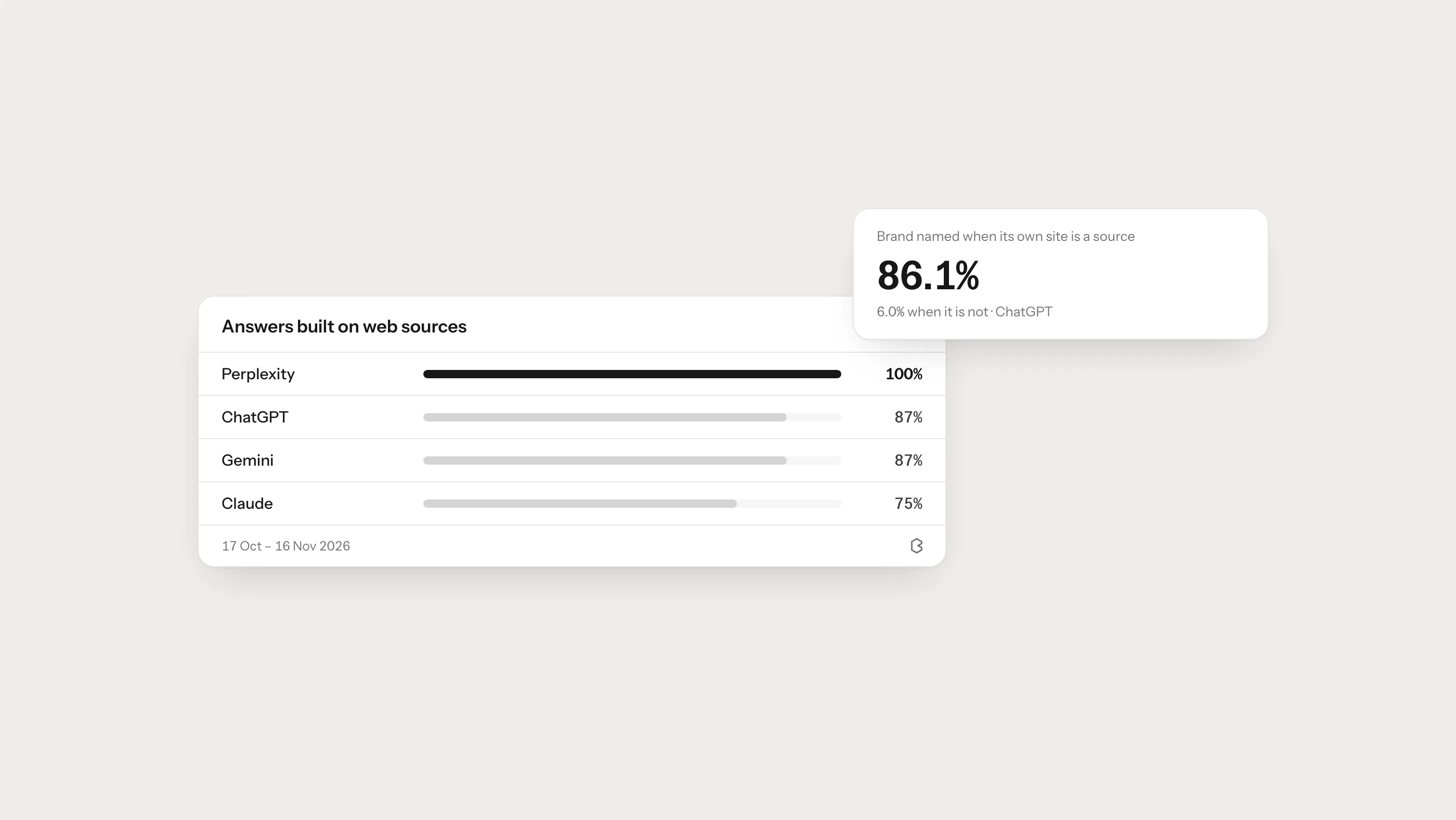
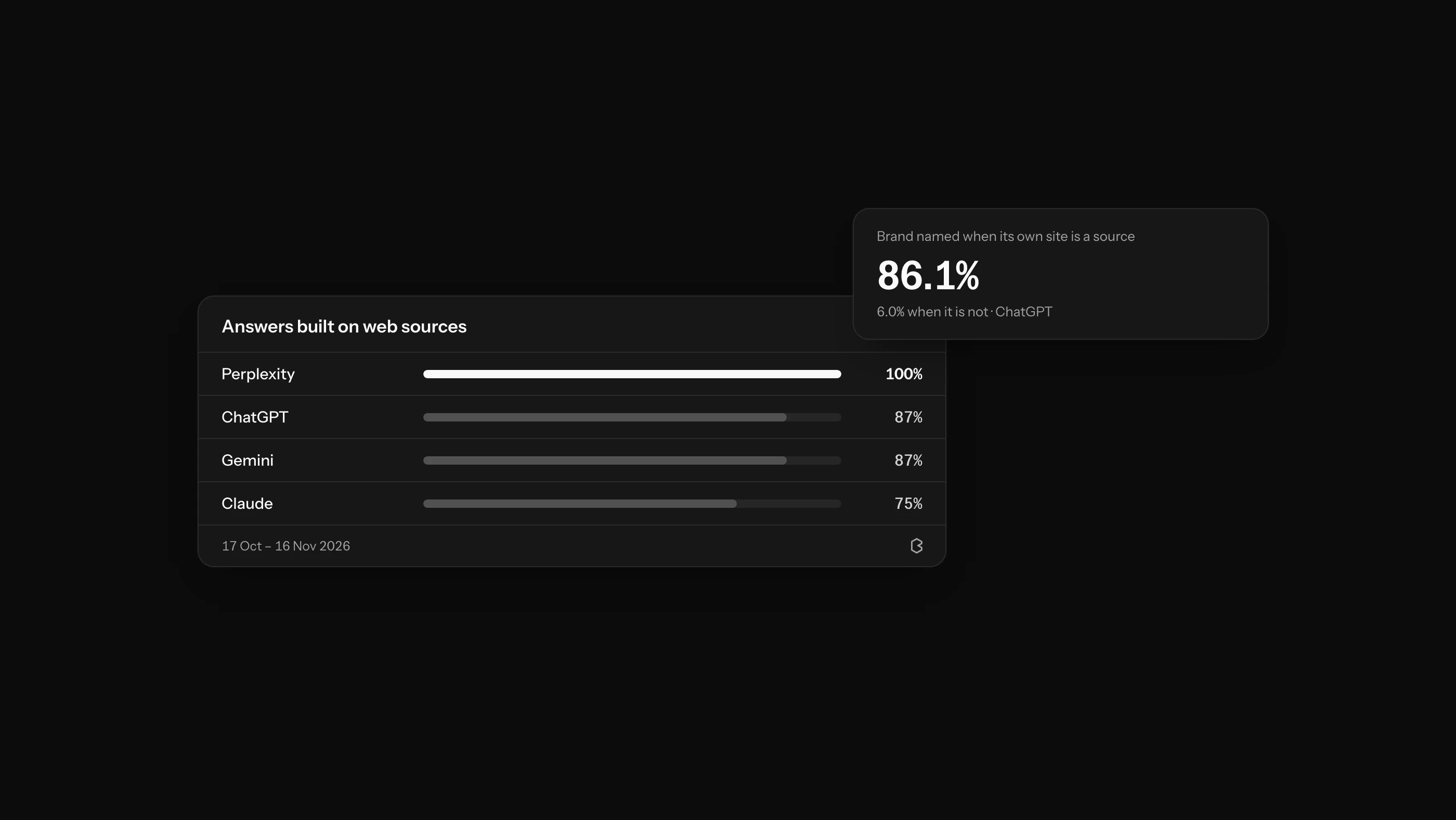
- Most engines search before they answer: ChatGPT and Gemini cited sources in 87% of answers in our data, Perplexity in 100%. Both AEO and GEO start with being one of those sources.
- Measure both the same way: mention rate, position, citations and share of voice across repeated runs, because about 11–12% of prompts change between runs.
AEO and GEO aim at the same outcome: getting your brand used and named when AI answers a question. AEO (answer engine optimization) puts the emphasis on being the direct answer to a specific question; GEO (generative engine optimization) puts it on how generative models like ChatGPT and Gemini pick sources and assemble a response. In practice the work is largely the same, so the useful question is not which acronym to choose but which parts of the work your brand is missing.
This guide sets out what each term means, where they overlap, where they differ in practice, and what to measure, using data from AI answers we track.
What is AEO?
AEO stands for answer engine optimization. The term came into use with featured snippets and voice assistants, when search engines started answering questions directly instead of only listing pages. Today it covers any system that answers with text: ChatGPT, Gemini, Perplexity, Claude, Copilot and Google’s AI Overviews and AI Mode.
AEO is about the question. Its starting point is “what will people ask, and is our page the clearest, most trustworthy answer to it?” We cover it in depth in what is AEO.
What is GEO?
GEO stands for generative engine optimization. The term comes from research into how large language models choose and use sources when they generate an answer. GEO is about the model: how it searches, which pages it reads, which it cites, and how it describes brands in the text it writes. Our guide to generative engine optimization covers it in full.
AEO vs GEO at a glance
| AEO | GEO | |
|---|---|---|
| Full name | Answer engine optimization | Generative engine optimization |
| Roots | Featured snippets, voice search, direct answers | Research on how generative models use sources |
| Starting point | The question a customer asks | The model that writes the answer |
| Typical work | Answer-first pages, clear definitions, FAQs, verifiable facts | Being retrievable for the model’s searches, being cited, being described correctly |
| Where it applies | Any system that answers questions, including Google’s classic answer features | ChatGPT, Gemini, Claude, Perplexity, AI Overviews, AI Mode |
| What success looks like | Your page is the answer | Your brand is named, cited and described well in generated text |
Where AEO and GEO overlap
Almost everywhere that matters. Both depend on the same chain of events: the engine searches, reads a handful of pages and writes an answer from them. Our data shows how much the answer depends on that first step.
| AI engine | Answers that cited web sources |
|---|---|
| Perplexity | 100% |
| Grok | ~100% |
| ChatGPT | 87% |
| Gemini | 87% |
| Claude | 75% |
All answers tracked in Brantial, October 17 to November 16, 2026.
On ChatGPT, brands whose own site was among the sources were named in 86% of answers; brands whose site was not were named in 6%. Whatever you call the discipline, being one of the pages the engine reads is the first requirement.
Where they differ in practice
The difference shows up in where teams put their effort.
An AEO lens tends to produce:
- pages that answer one question clearly at the top,
- definitions, how-to steps and FAQs that can be quoted as they are,
- tight, verifiable facts: prices, specifications, dates.
A GEO lens tends to add:
- coverage of the sub-questions models search for when they break a broad question down (query fan-out),
- presence on the third-party sites models cite for your category,
- consistent brand facts across the web so the model describes you correctly,
- monitoring of how each engine describes and ranks you against competitors.
A brand that only does AEO can end up with excellent answer pages that never get retrieved because the model searched for something slightly different. A brand that only does GEO can end up widely mentioned but described vaguely, because no page states its facts clearly. You need both.
What to measure for each
The measurements are shared, which is the clearest sign the two are one discipline.
| Metric | What it tells you |
|---|---|
| Mention rate | How often your brand is named across a fixed set of prompts |
| Position in the answer | First recommendation, one of several, or a passing mention |
| Citation rate | How often your pages are listed as sources, and which ones |
| Share of voice | Your mentions against competitors on the same prompts |
| Description accuracy | Whether the answer gets your products, prices and strengths right |
| Per-engine results | ChatGPT, Gemini, Claude and Perplexity behave differently |
Measure all of these over repeated runs. In our data about 11–12% of prompts flipped between “named” and “not named” from one run to the next on ChatGPT, Gemini, Grok and Claude, and 19% on Perplexity. A single check can mislead in either direction; see why AI platforms show different answers.
Which should you focus on?
Treat AEO and GEO as one job with two checklists:
- Can the engines find you? Crawlable pages, search crawlers allowed in robots.txt, text that does not depend on JavaScript.
- Do you have the best page for each question? Answer-first content with facts nobody else has.
- Are you on the sites the engines cite? Check the sources behind the answers in your category and fill the gaps.
- Are you described correctly? Consistent facts everywhere, corrected where they are wrong.
- Are you measuring it as a rate? The same prompts, every engine, over time.
If you are starting out, an AI visibility audit answers all five for your brand in one pass.
Frequently asked questions
Is AEO the same as GEO?
They share the same goal, visibility inside AI-generated answers, and most of the same work. AEO emphasizes being the direct answer to a question; GEO emphasizes how generative models choose sources and describe brands. Most teams can treat them as one discipline.
Is GEO replacing SEO?
No. AI engines search the web before most answers, and the pages they find are largely the pages good SEO makes findable. GEO and AEO add new goals and measurements on top of SEO; they do not replace it.
Which came first, AEO or GEO?
AEO is the older term, from the era of featured snippets and voice assistants. GEO came into use with research on generative AI search.
What does GEO stand for in marketing?
GEO stands for generative engine optimization: improving how often generative AI tools such as ChatGPT and Gemini cite your pages and name your brand in their answers.
How do I measure AEO and GEO?
Track mention rate, position in the answer, citations, share of voice and description accuracy across a fixed set of prompts on each engine, repeated over time.